CATEGORY BENEFITS
What is a glass Capillary Viscometer?
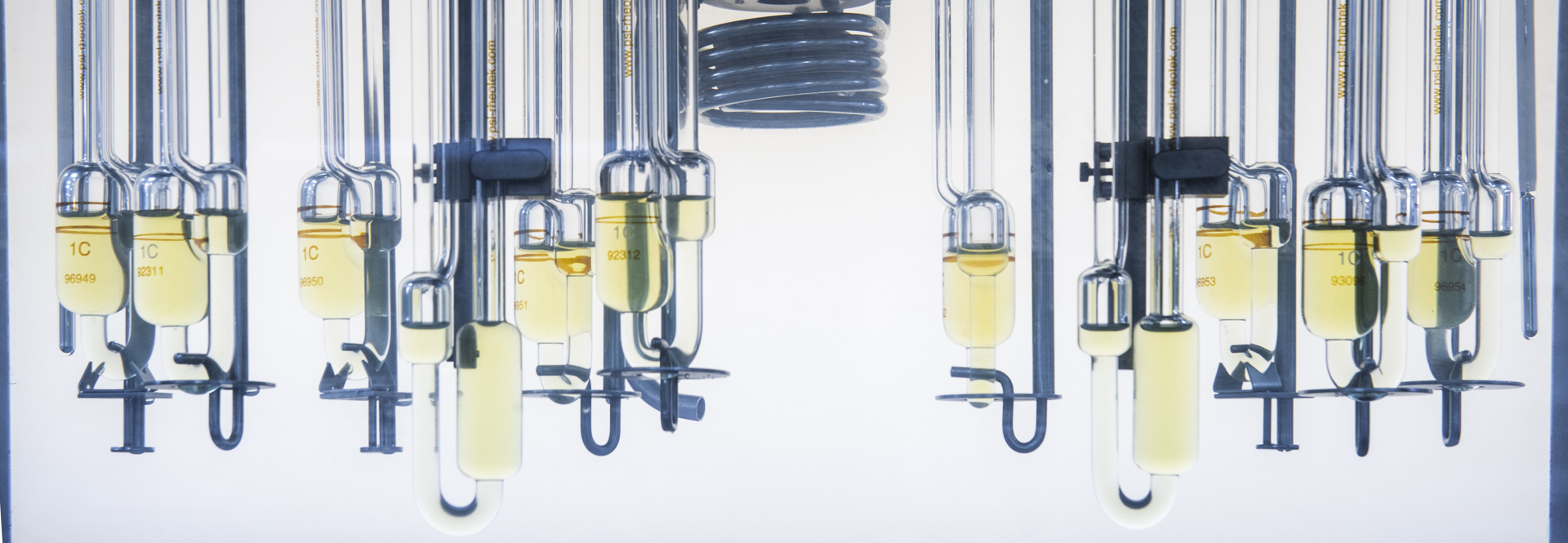
A glass capillary viscometer measures viscosity by recording the time required for a liquid to flow through a precisely defined glass capillary under gravity at a controlled temperature. The measured flow time is converted into kinematic viscosity using a calibrated viscometer constant. This simple but highly accurate principle makes glass capillary viscometry the reference method for viscosity measurement.
How Glass Capillary Viscometers Work
The accuracy of a glass viscometer depends on three critical factors:
- Capillary geometry – manufactured to tight tolerances
- Temperature control – viscosity is highly temperature-dependent
- Calibration traceability – ensuring reliable conversion from flow time to viscosity When these factors are controlled, glass capillary viscometers deliver highly repeatable and comparable results across laboratories.
- Operator skill – capillary viscometry requires robust attention to detail for repeatable and reliable results.
Common types of glass capillary viscometers
Several glass viscometer designs are used depending on sample type and testing requirements:
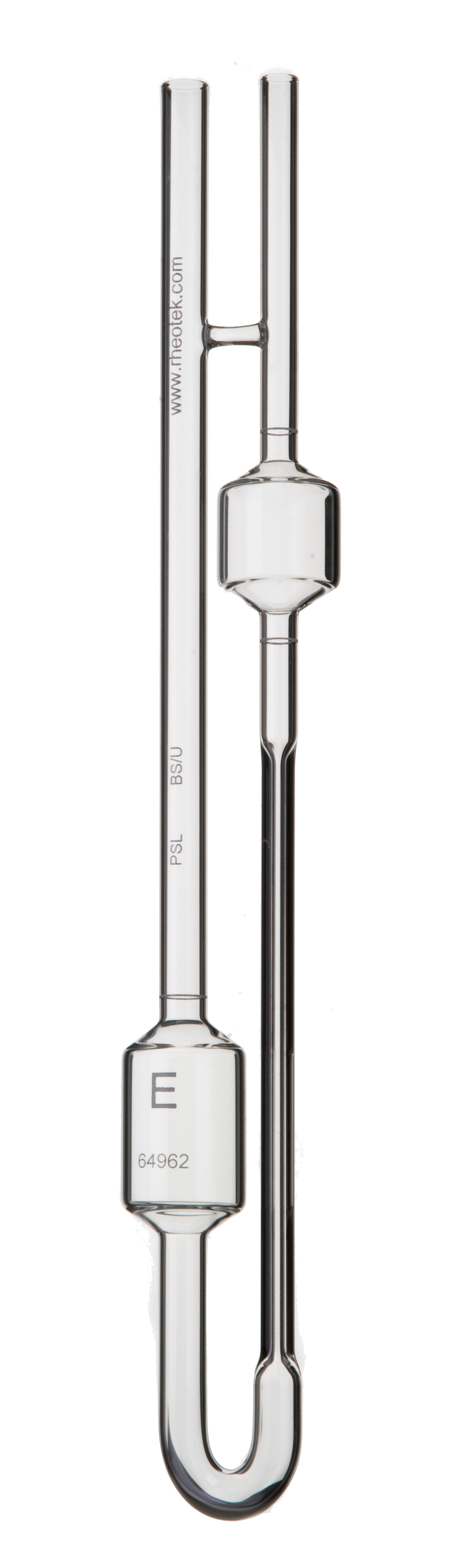
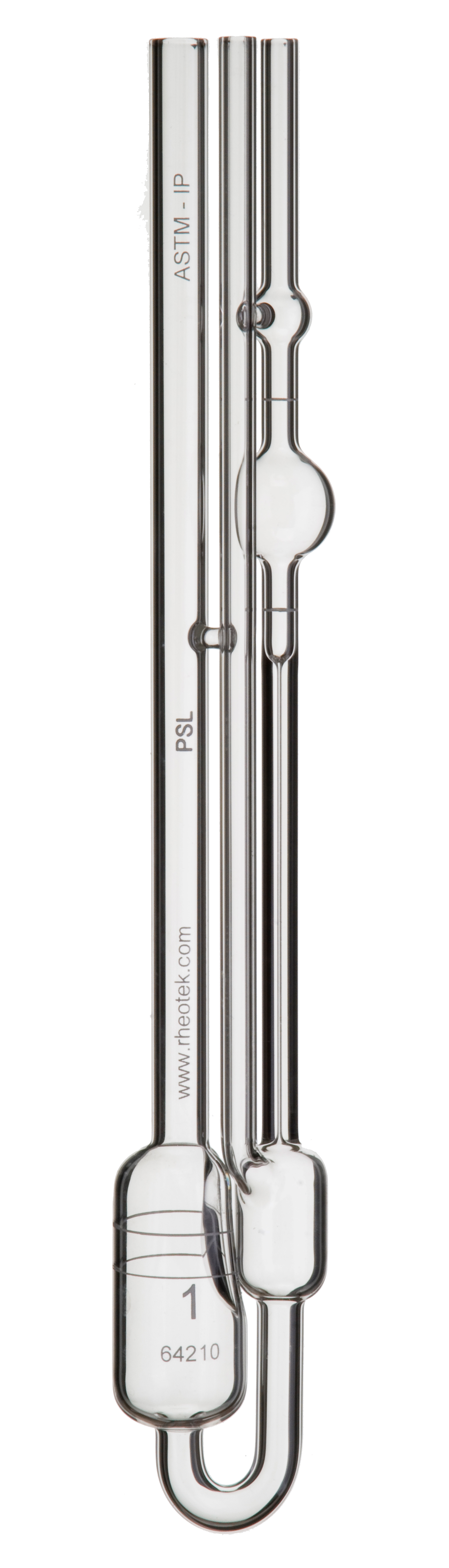
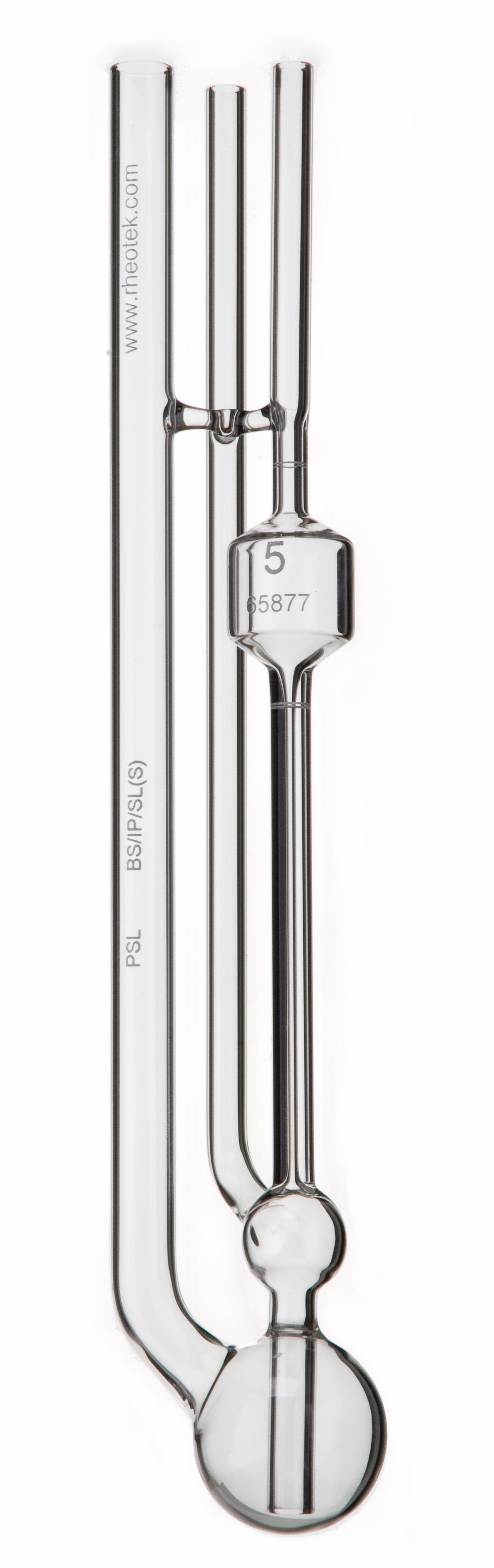
- Ubbelohde viscometers – minimize hydrostatic head effects and are widely used for transparent liquids. Easy to use and very accurate. The go-to choice for newbies to the world of capillary viscometry.
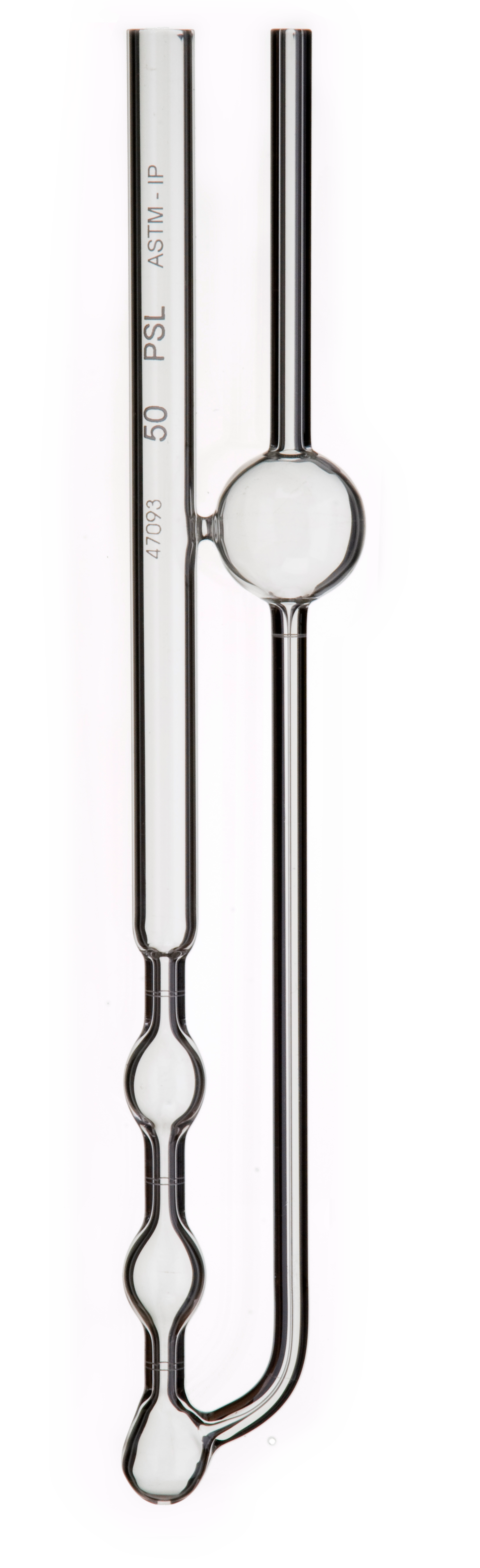
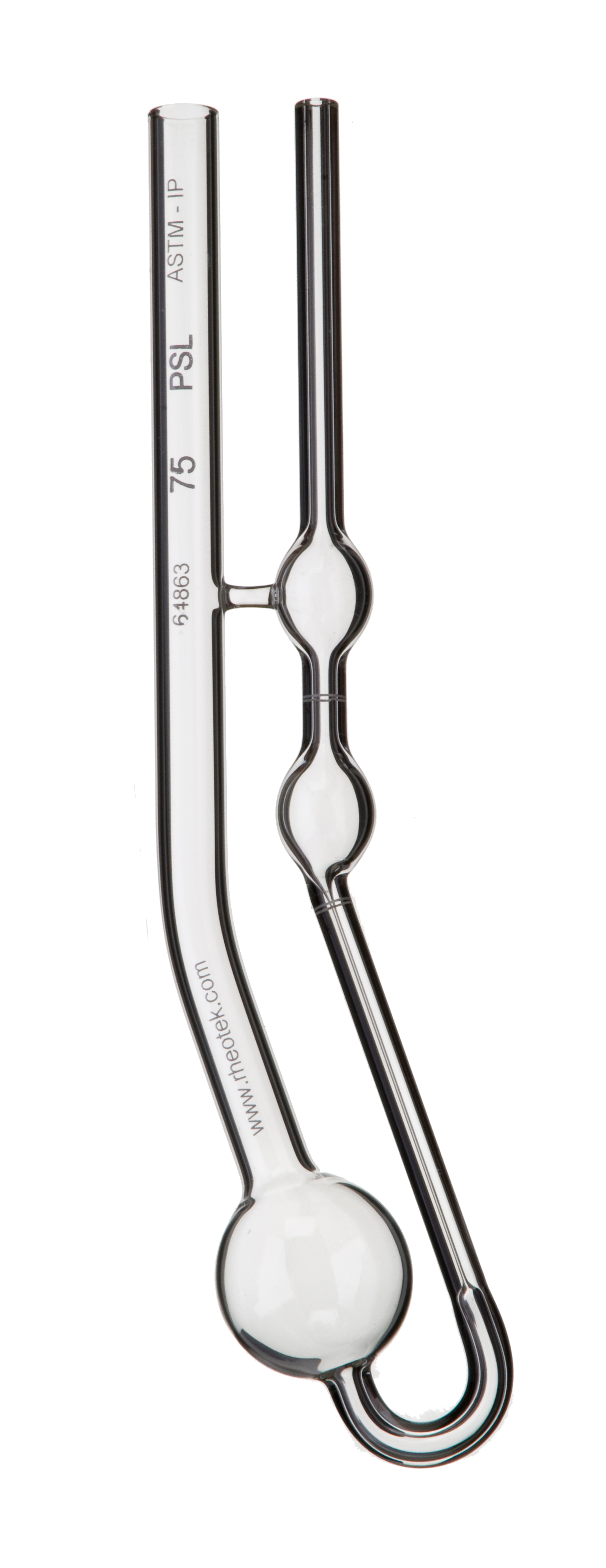
- Cannon-Fenske Routine viscometers – commonly used for testing transparent samples. Volume dependent direct flow viscometer. Requires some skill.
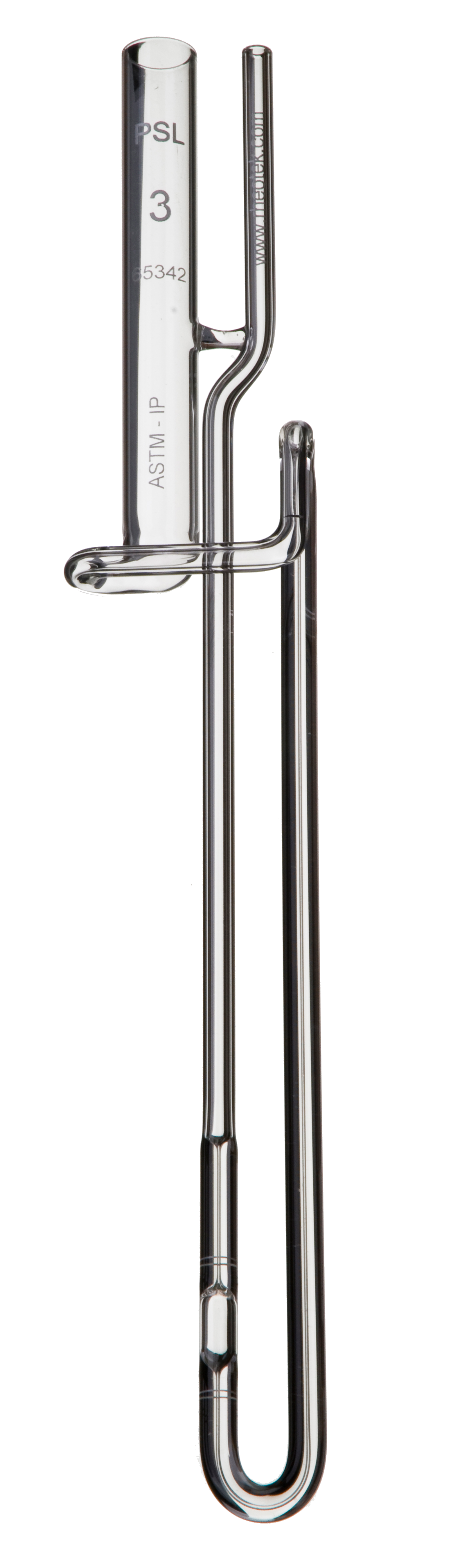
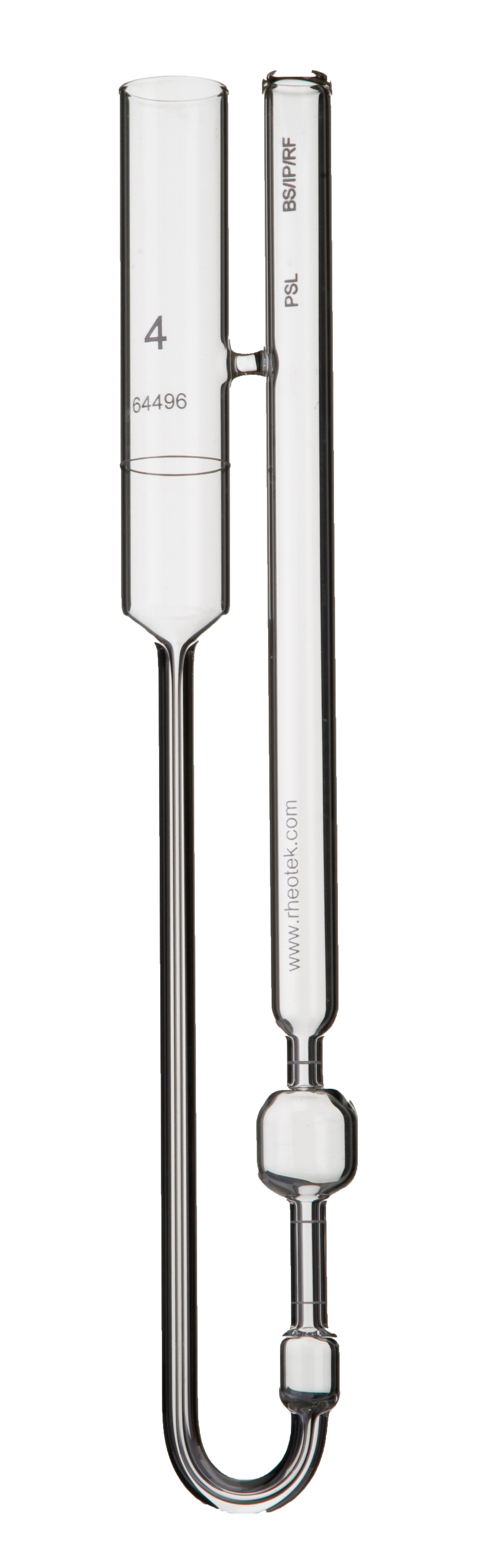
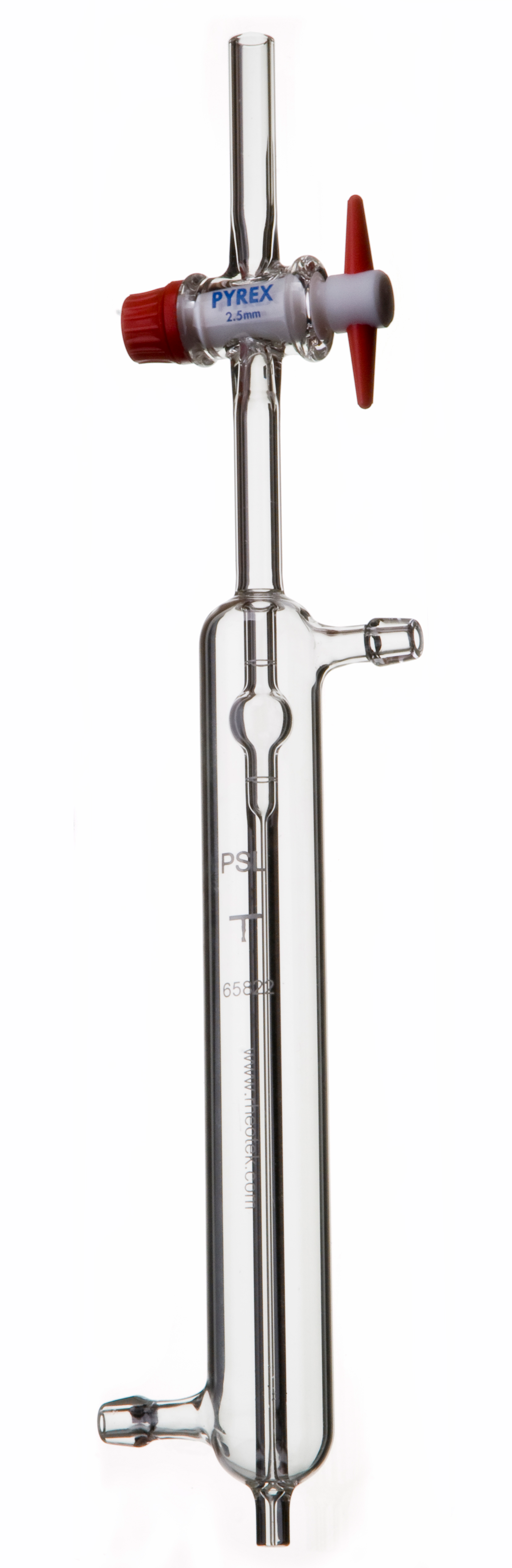
- U-tube reverse flow viscometers – suitable for opaque or dark liquids where meniscus visibility is limited
- Cannon-Fenske Opaque viscometers – suitable for testing opaque samples.
Each design follows the same measurement principle but addresses specific analytical needs.
Standards and compliance
Glass capillary viscometers are specified in international viscosity test method standards, including:
- ASTM D445
- ISO 3104
- IP 71
- DIN 51562
- USP 911
Compliance with these standards requires the use of a calibrated glass capillary viscometer fitted in a liquid stirred constant temperature bath. Using a viscometer with a traceable certificate of calibration (ISO 17025) ensures a direct link to the primary reference in kinematic viscosity.
Calibration and Traceability
Each PSL-Rheotek viscometer is supplied with a UKAS (ISO 17025) Certificate of calibration. The values on each certificate are directly traceable to the primary reference in kinematic viscosity. This reference is double distilled water at 20 degrees C, which has an internationally agreed value of 1.0034 cSt/mm2/s. Following the procedure detailed in ASTM D2162 and using Master Viscometers, a primary scale is established.
Looking for Specific Models or Specifications?
This page focuses on the principles, applications, and standards behind glass viscometers. For details of designs, sizes, availability, and ordering, visit: Glass Viscometers | PSL Rheotek Webshop
Manufactured in the UK
All PSL Rheotek Viscometers are manufactured and calibrated in the UK to the highest standards. The raw material is low thermal expansion borosilicate glass tubing and precision capillary bore.
High Performance Glass Viscometers
Looking for Specific Models or Specifications?
FAQ
You asked, we answered
What is a glass capillary viscometer?
A laboratory instrument that measures kinematic viscosity based on the time a liquid flows through a calibrated glass capillary.
Why is Temperature control important?
Small temperature changes may cause significant viscosity variation, which is why the use of a temperature controlled bath is mandatory.
How often should glass viscometers be recalibrated?
Recalibration is typically recommended after two years of use. Periodical validation of calibration data is easily carried out by measuring a viscosity reference standard.
What if I just measure the sample at room temperature?
Then the result will represent only an approximation. At room temperature, it is unlikely that repeatable flow times will be achieved.
Do I need to use a thermometer?
Yes, a liquid-in-glass or digital precision thermometer is essential to verify the bath temperature. The thermometer should conform to the specifications set out in a test method (e.g. ASTM D445, IP71, ISO3104) and be calibrated e.g. by an ISO 17025 laboratory.
Why do I need a chiller for the bath, when running it at 25 degrees C?
The tolerance band for temperature stability is typically +/- 0.02 degrees C. To achieve this level of temperature stability, the bath heaters are not sufficient when the test temperature is close to ambient. Even with modern high tech heaters, there will be temperature spikes, which exceed +/- 0.02 degrees C. Applying external cooling will counter these temperature spikes.
Why should I buy a PSL Rheotek branded viscometer?
The flow properties of the viscometer are determined by the interior surface of the glass. This should also be as smooth as possible in order to allow the sample to flow with the minimum of turbulence. Look out for smooth transitions between the different parts of the viscometer tube, when trying to assess the quality of a viscometer tube. At Poulten Selfe & Lee Limited, we take pride in manufacturing viscometers with superior flow properties.
I want to save money, can you sell me an uncalibrated viscometer?
Yes, we can. However, you will need to perform a calibration yourself, before you can use the viscometer tube. To perform the calibration, you will need two viscosity reference standards from us and then conduct the calibration procedure as described in ASTM D446 or ISO 3105. If you purchase a calibrated viscometer instead, is ready to use out of the box.
We have an audit coming up and have lost our calibration certificates, can you send us a replacement certificate?
Please contact us via the contact form and provide us the serial number and the type of viscometer for possible reissue of certificates. If it is possible to reissue the certificate, we will send the replacement within 1-2 days. This service is chargeable.
CUSTOM SOLUTIONS
Searching for custom instrumentation for your unique requirements?
Each PSL Rheotek viscometer system is configured for the owner! A wide variety of international test method protocols are readily available in the software and company specific method protocols are also supported.