
CATEGORY BENEFITS
What is an Automatic Viscometer?
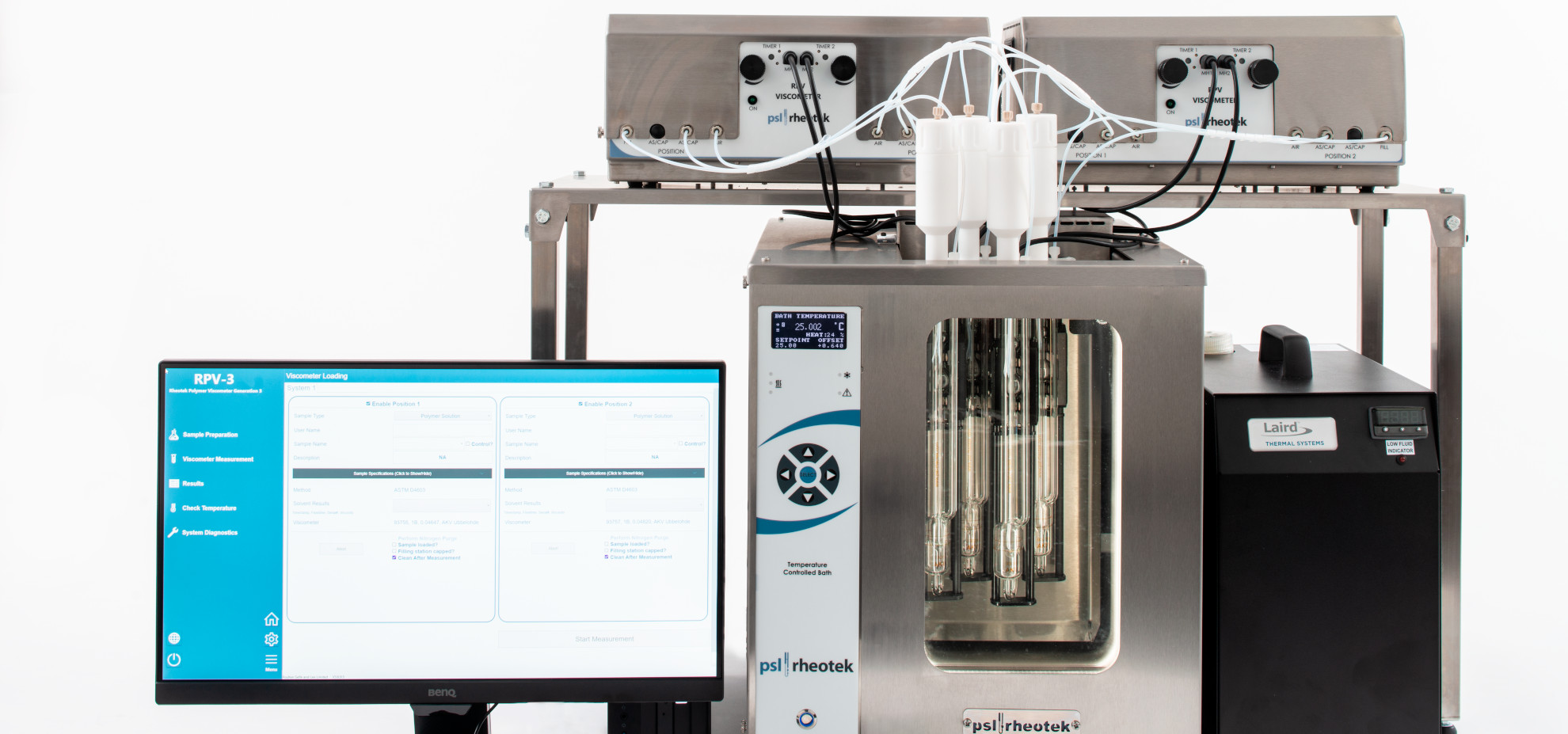
An automatic viscometer system automates the entire test sequence for capillary viscosity measurement. Key operations such as sample elevation, sample resting, capillary release, flow time detection, result calculation, cleaning, and drying are handled with minimal human input, typically initiated by a single “start” command.
Step by step how to use it
The operator loads the sample, closes the cap and then presses “start testing” in the software. The following operations will then be conducted automatically:
- Sample elevation,
- Sample resting
- Sample release
- Flow time determination in duplicate or triplicate as per method requirement
- Results calculation,
- Sample removal
- Sample path cleaning
- Sample path drying.
Benefits of Automation
Automatic viscometers deliver a range of practical advantages:
- Higher throughput — enables more samples per unit time
- Superior repeatability — less operator influence on timing
- Improved safety — reduced handling of solvents and samples
- Robust audit trails — digital records and certificates of analysis
- Method compliance — built-in support for widely used standards
Applications and Industries
Automatic viscometers are widely used in:
- Polymer testing (intrinsic viscosity, molecular characterization)
- Petrochemical labs for routine quality control
- Contract testing laboratories
- Pulp & Paper laboratories
- Whether measuring PET, PVC, PA, or biopolymers, these systems support complex sample streams with minimal intervention.
Operator safety
Automatic systems integrate cleaning and drying steps, limiting operator contact with solvents to maintenance tasks such as refilling tanks and emptying waste. By embedding these returns into automated sequences, risk exposure is reduced and lab safety is enhanced.
Method compliance
PSL Rheotek automates solvent based viscosity test methods with full compliance:
ASTM D4603 (IV of PET)
ISO 1628 parts 1–5
IEC 60450
ISO 5351
ASTM D2857
ISO 307
Certificate of Analysis Testing
The PSL Rheotek Polymer Viscometer provides the data for batch release COA testing. Process plants across the world place their trust in the RPV polymer viscometer for an expedient feedback loop to process engineering control. Downstream stakeholders in the polymer value chain benefit from reliable data on incoming raw.
rPET can also be measured
rPET is an inherently variable polymer. Running melt flow viscosity on rPET may not produce useable data. Solvent based viscosity test provides the real IV data for batch certification.
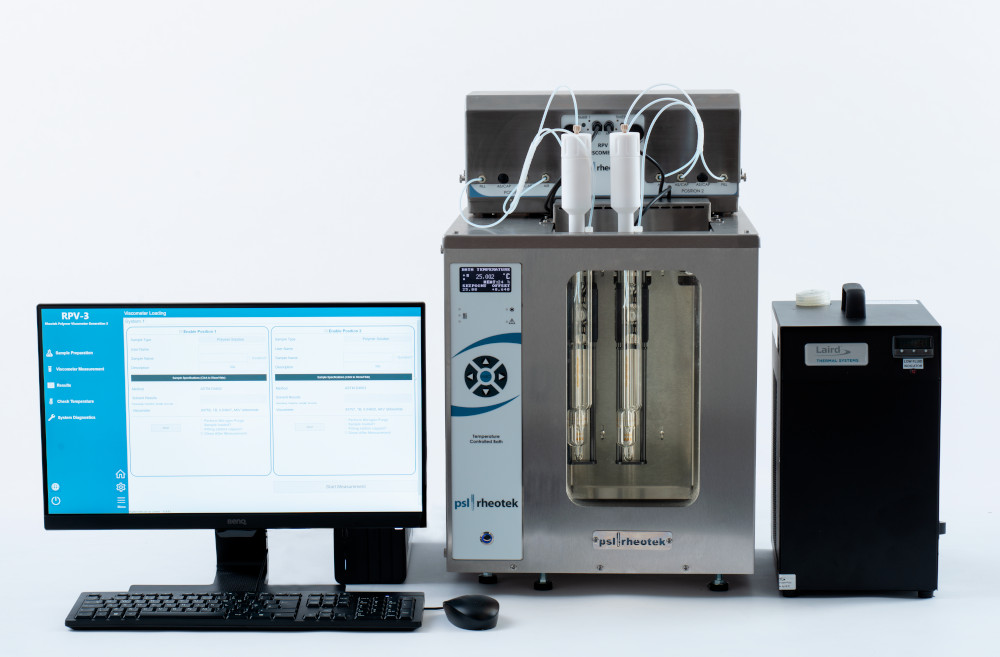
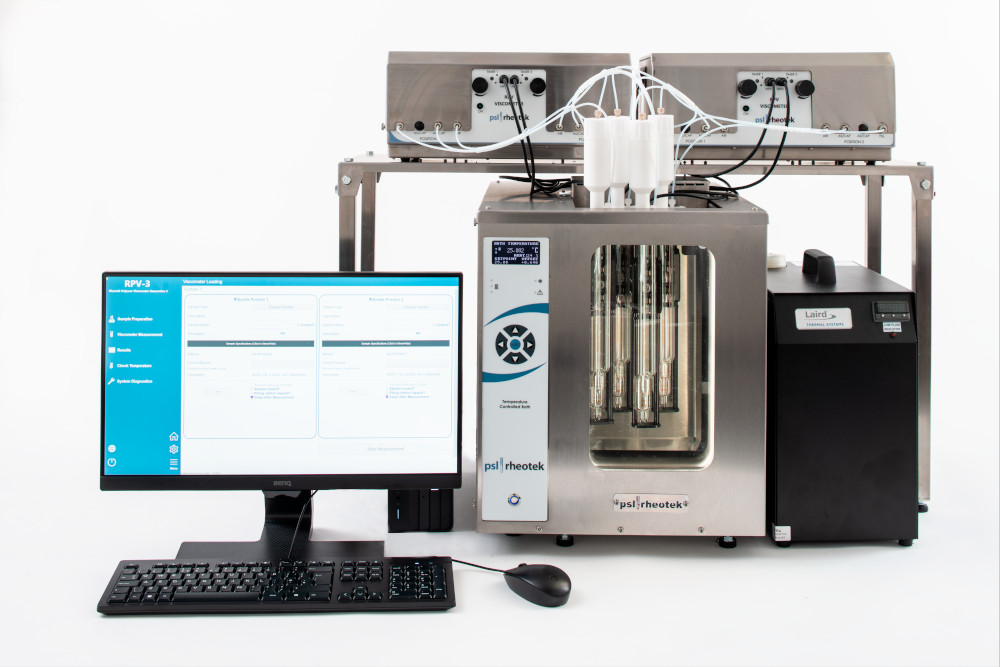
Automated Viscometers by PSL Rheotek
To explore detailed configurations, options, and model-specific information, visit: RPV-3 Polymer Viscometer – solvent based viscosity
PRODUCT GALLERY
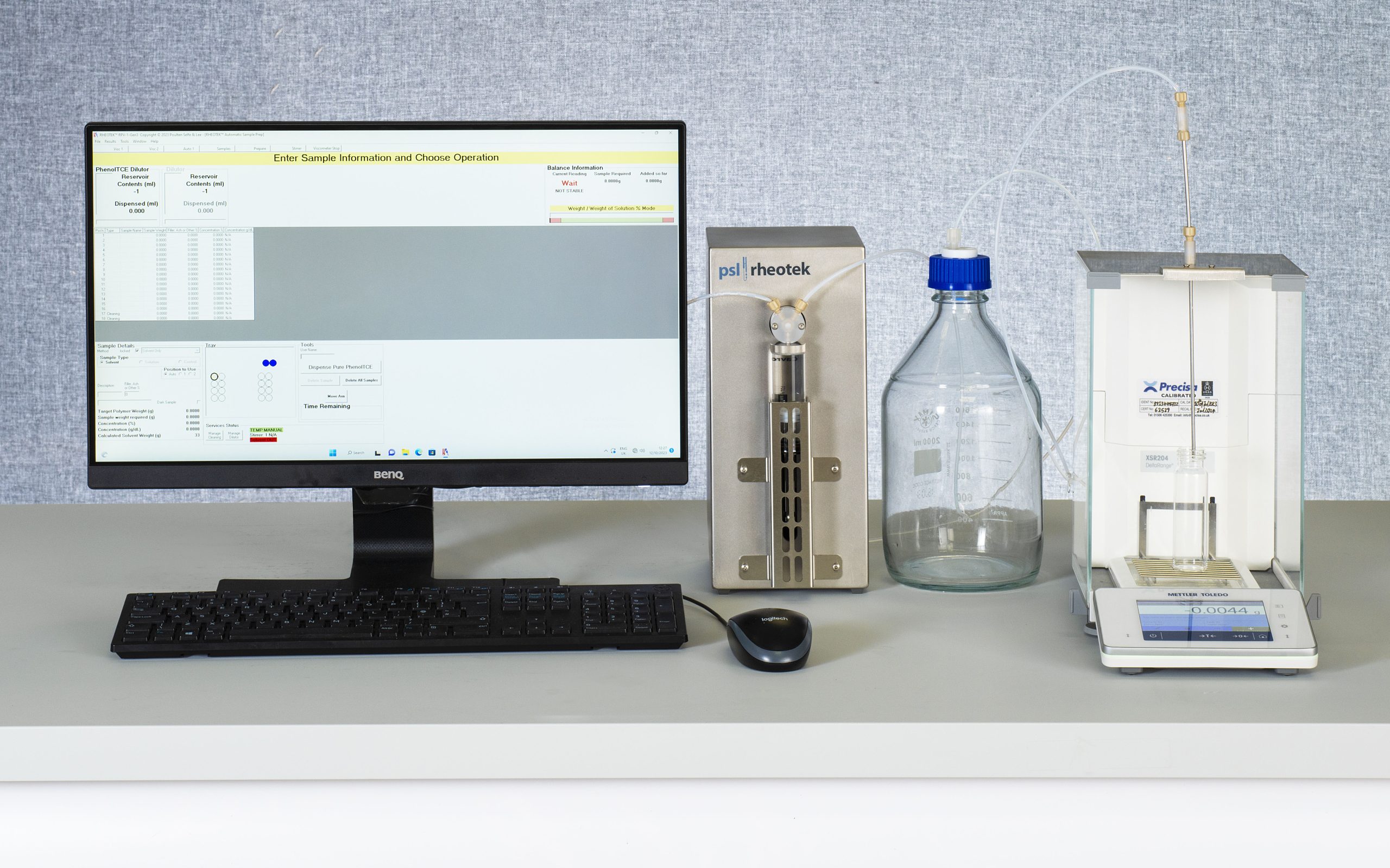
Automated Polymer Viscometers
FAQ
You asked, we answered
Can automatic viscometers handle recycled polymers?
Yes. PSL Rheotek systems are designed to measure a broad range of polymers, including rPET and samples with additives.
How long does a typical measurement take?
Most automated measurements complete within approximately 26–30 minutes.
Is operator training required?
Yes — training ensures correct configuration and integration into your lab’s workflows
What safety features are included?
Automated cleaning and drying limit solvent exposure; operator contact is minimized. Auto sampler configurations further reduce the operator exposure to samples and solvents.